



 Eat
Eat Garden
What kids see
The three guidelines
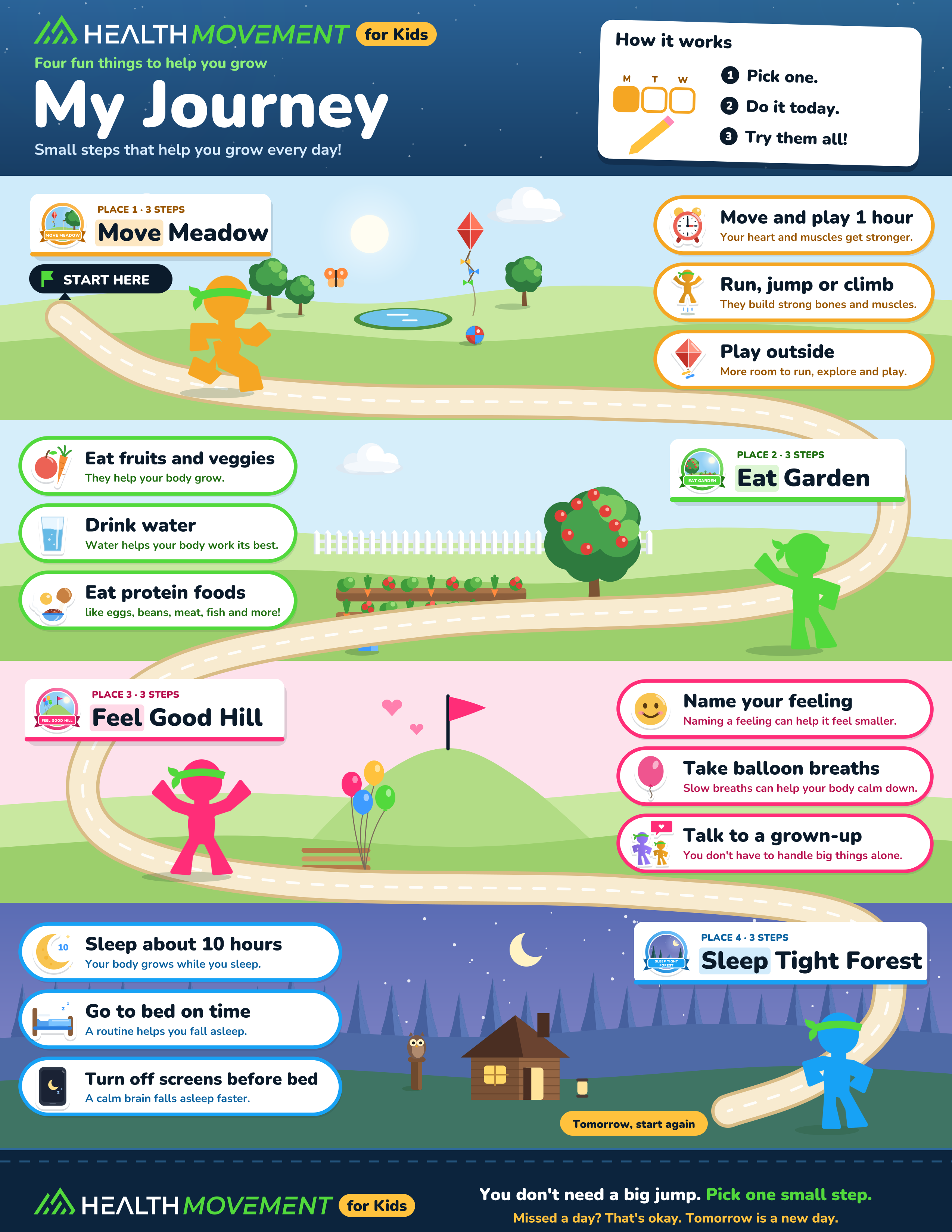
 Eat fruits and veggiesThey help your body grow.
 Drink waterWater helps your body work its best.
 Eat protein foodsLike eggs, beans, meat, fish and more!
Read it together
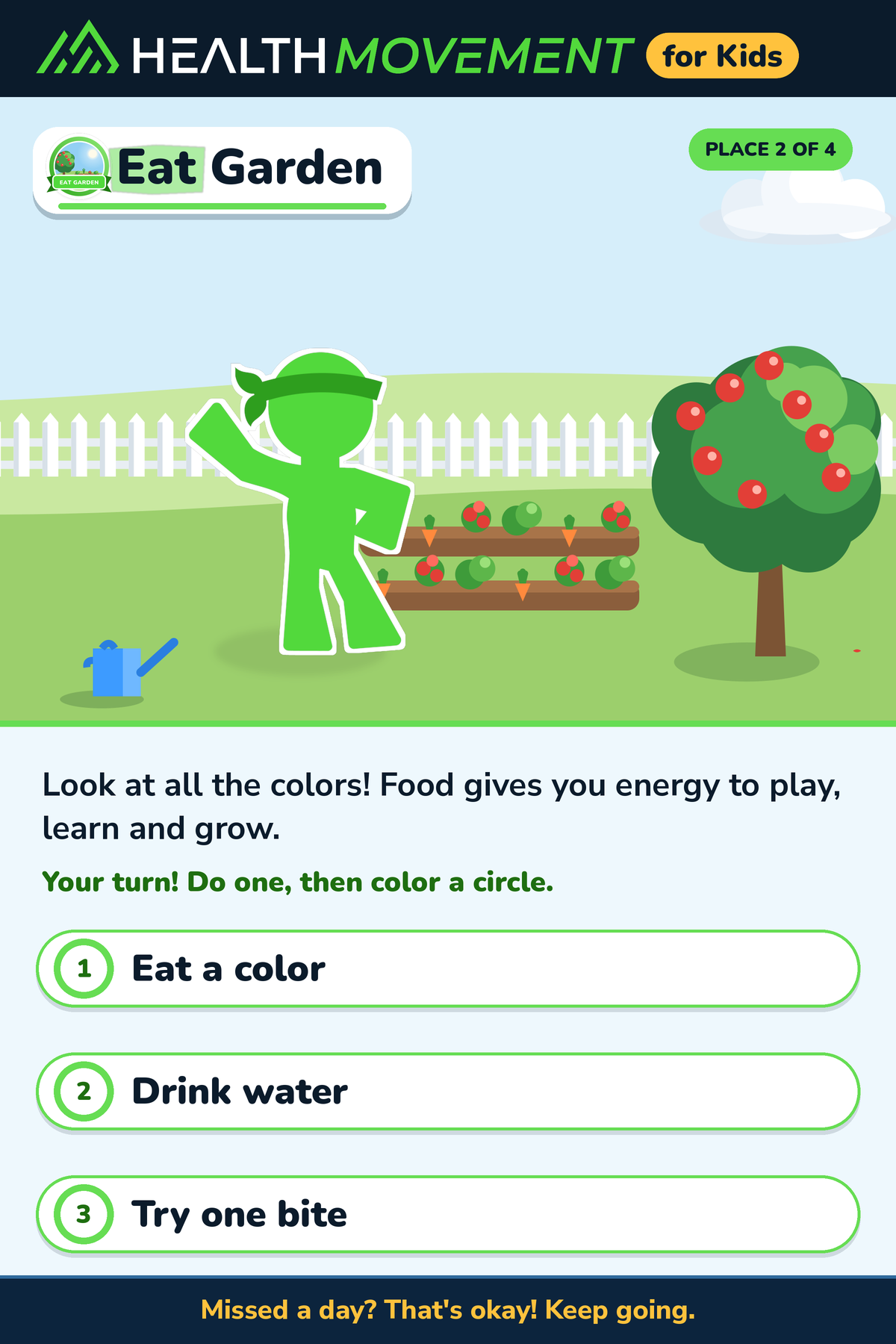
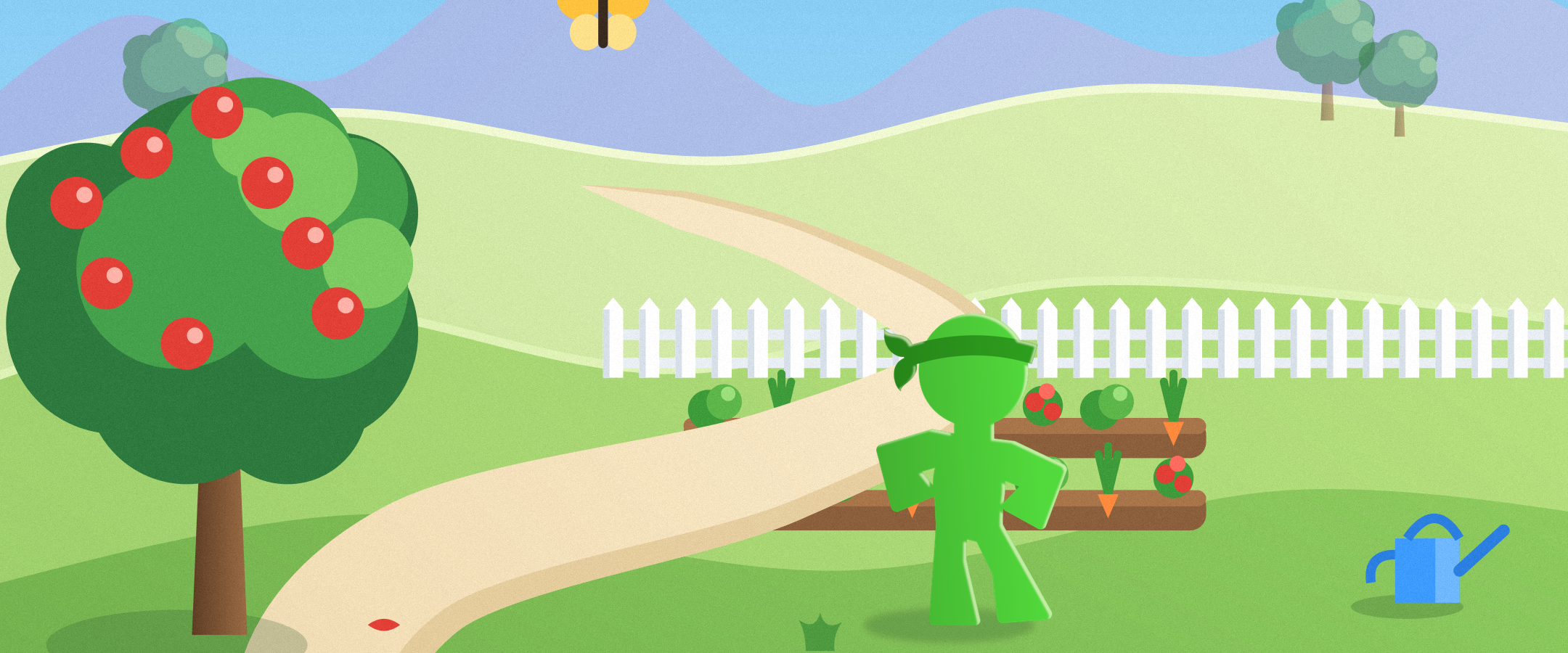
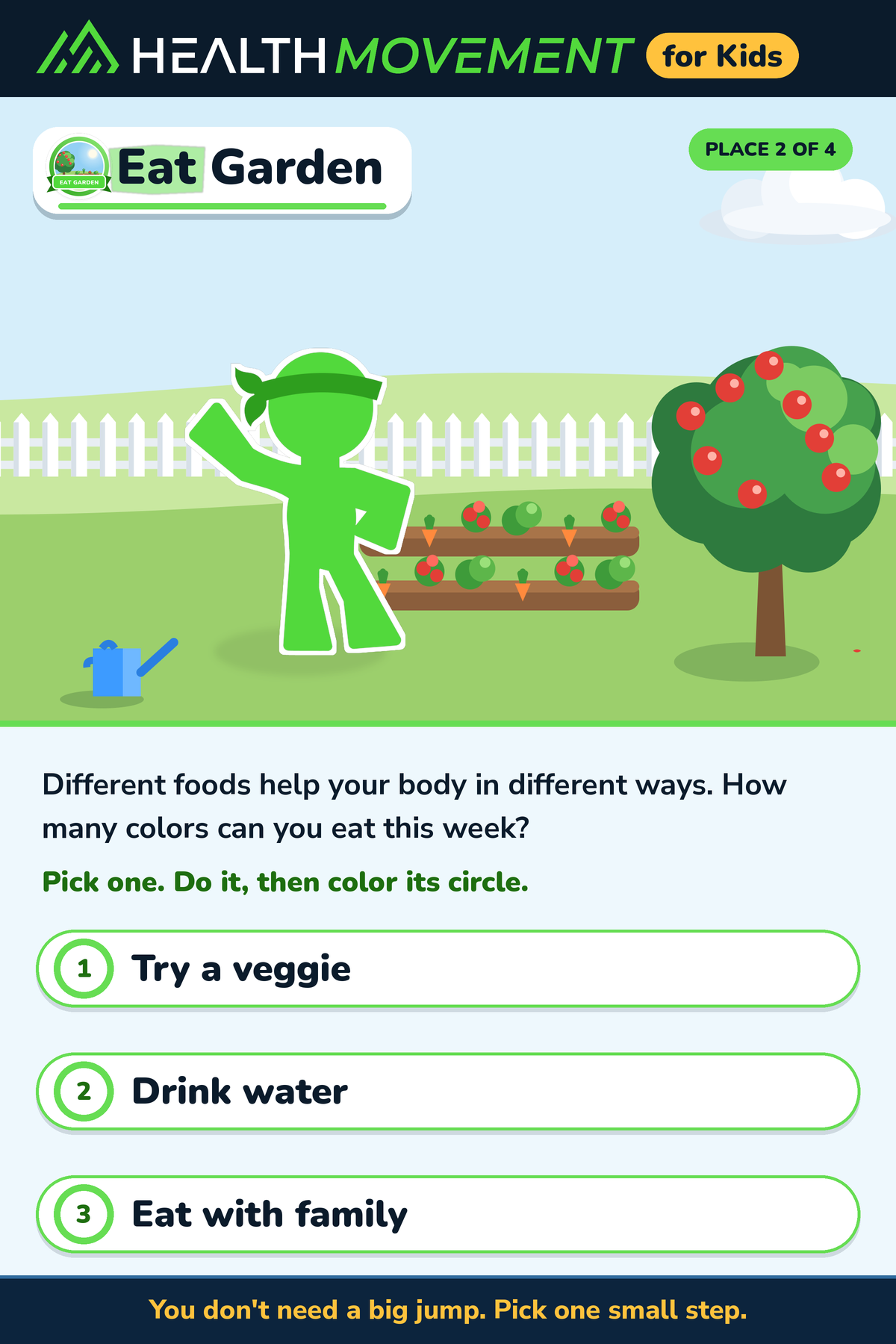
Look at all the colors: red carrots, a tree full of apples, green leaves. Food gives you energy to play, learn and grow. Your character takes one brave bite of something new. Yum, or maybe not yet, and that is okay! You tried.
Your turn: Eat a color. Drink water. Try one bite.
For grown-ups
What it means
Grown-ups decide what food is offered, when and where. Children decide whether to eat it and how much. This is Ellyn Satter's division of responsibility in feeding.
That is why the kid pages never talk about portions or amounts: for a child, amount is not their job. Offer vegetables and fruits often, make water the everyday drink, and include a protein food at meals.
Try this at home
- Ages 5 to 8: eat a new color today; let them choose a fruit or vegetable at the store; one brave bite of something new, with no pressure to finish it.
- Ages 8 to 11: let them help plan or make one snack or meal a week; make water the go-to drink at home; talk about food as energy for the things they love doing.
- Everyone: sit down together for a family meal when you can, with no screens.
Say this, not that
Say "Do you want to try one bite?"
Not "Clean your plate."
Say "This food gives you energy to play."
Not "That's junk."
Say "Calories are the energy in food, and every food has some."
Not "That has too many calories."
Treats are just treats: offer them without bargaining, guilt or bribes. Don't comment on bodies, including your own.
If your kid asks about calories
A short, true answer is enough. Here are the words we use with kids:
"Calories are the energy in food. Your body uses that energy to run, think and grow."
That is science, like learning what a heart does. Kids never count calories, get a target or hear "eat less", and no food is called good or bad. The bigger questions, like what you keep in the house and how treats work, are grown-up conversations.
One better
A choice that suits what is coming next. It always adds or swaps, and never takes food away:
- Water before a long walk.
- Add one fruit or veggie to your snack.
Sources: Ellyn Satter Institute, the division of responsibility in feeding; Dietary Guidelines for Americans, 2025 to 2030 (AAFP summary, July 2026).
In the classroom
Do one together
- Eat the rainbow chart K to 5
Draw or list foods by color on a paper rainbow. Nobody has to share what they ate. - Brave bite stories K to 5
A time you tried something new. It does not have to be food, and passing is always fine. - Water cheer K to 2
Make up a class cheer for water, with motions. - Plan a snack 3 to 5
Design a snack plate on paper with any foods you like. Nothing is labeled good or bad. - Mystery color K to 2
The teacher names a color; kids name a food that color.
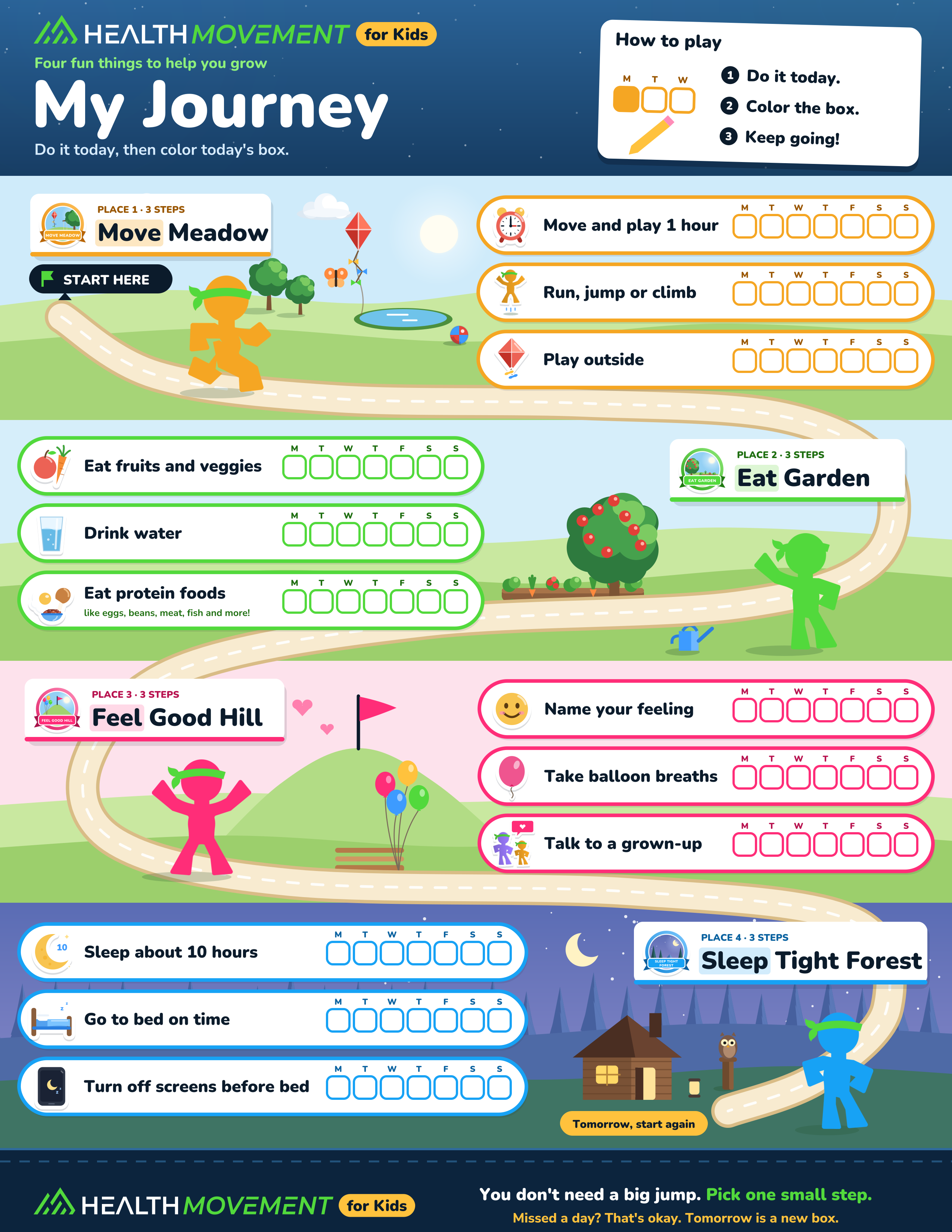
After the class does one together, a helper colors one box in Eat Garden on the class tracker poster. Class totals only.
Printables
For Eat Garden
Next place: Feel Good Hill
This is educational information, not medical advice. Questions about your child's health or growth? Talk with your pediatrician.